My Japanese is decent enough for daily conversation, but put me in front of a government form or an insurance policy, and I’m completely illiterate. All those kanji combos swim around the page in bureaucratic soup. It’s harder than trying to decipher emojis.
Now imagine your family trying to deal with Japanese paperwork when you’re not around to help translate.
This isn’t just about language, though that’s part of it. It’s about understanding systems that work completely differently from what they’re used to. Like why you need a hanko for some things but not others. Or why some bank accounts require you to go to the specific branch where you opened them. Or why the post office is also a bank.
Even something as simple as your address can be confusing. Is it 1-2-3 Nagatacho or 2-3 Nagata-cho 1? Does your building have a name? Is there a room number? Is there a door code? Your family might know you live in Nagatacho, but good luck finding your specific apartment without very detailed instructions.
The reverse is also true, by the way. If you have assets back home, Japanese authorities might not understand concepts like 401ks or health savings accounts or why you have seventeen different investment accounts with names like “Aggressive Growth Fund” and “Conservative Bond Portfolio.”
Being bilingual and bicultural is great until you need to explain one culture’s systems to someone from the other culture while you’re not available to do the explaining.
I have a “friend” who keeps her important documents in seven different places. Her passport is in a fireproof bag. Her insurance papers are in a file cabinet. Her bank information is scattered across three different drawers. Her passwords are mostly in Bitwarden, but there are a few written on sticky notes tucked into file folders.
That friend is me. I know where everything is, of course. But if something happened to me, my husband would be playing a very expensive treasure hunt. And Tod’s never been good at finding things.
This scatter of documents is pretty normal, actually. We all accumulate important stuff over time, and we put it wherever seems safe or convenient at the moment. Your residence card goes in your wallet until you need to make a copy, then it lives on your desk for a while, then eventually gets filed somewhere you’ll definitely remember.
Except six months later, you definitely don’t remember. You start hunting for it like a dog with a lost toy. Under the sofa? No. Woof!
Living in a foreign country just multiplies this problem, because you have important documents for two different countries (at least), possibly in different languages, governed by different legal systems.
I’m not suggesting you need to become obsessively organized. But having all your important information in one place, where someone else can find it? That’s just being considerate to your future self and the people who care about you.
Plus, you’ll never again have that moment where you find yourself barking at the sofa in a panic when you can’t find your residence card and you’re pretty sure immigration is going to deport you for not carrying it.
If something happened to you tomorrow, would your family know:
The password to your phone?
Which banks you use in Japan?
How to access your overseas investment accounts?
Where you keep your residence card?
Who your emergency contact is at work?
Whether you have life insurance, and if so, with which company?
I’m going to guess the answer is no to at least half of those. And that’s totally normal, because most of us don’t think about these things until we have to. But by procrastinating, you’re playing chicken with fate.
Here’s what makes it important for foreign residents: your family probably doesn’t understand Japanese banking, Japanese bureaucracy, or Japanese anything. Meanwhile, your Japanese friends and coworkers don’t necessarily understand your home country’s legal requirements or tax obligations.
You’re the bridge between these two worlds, and if you’re not around to translate, everyone’s going to be struggling.
The good news is that getting organized isn’t actually that hard. It’s just boring and administrative, which is why most of us avoid it. But once it’s done, it’s done, and you can go back to more interesting things.
Like figuring out why conbini fried chicken is so good.
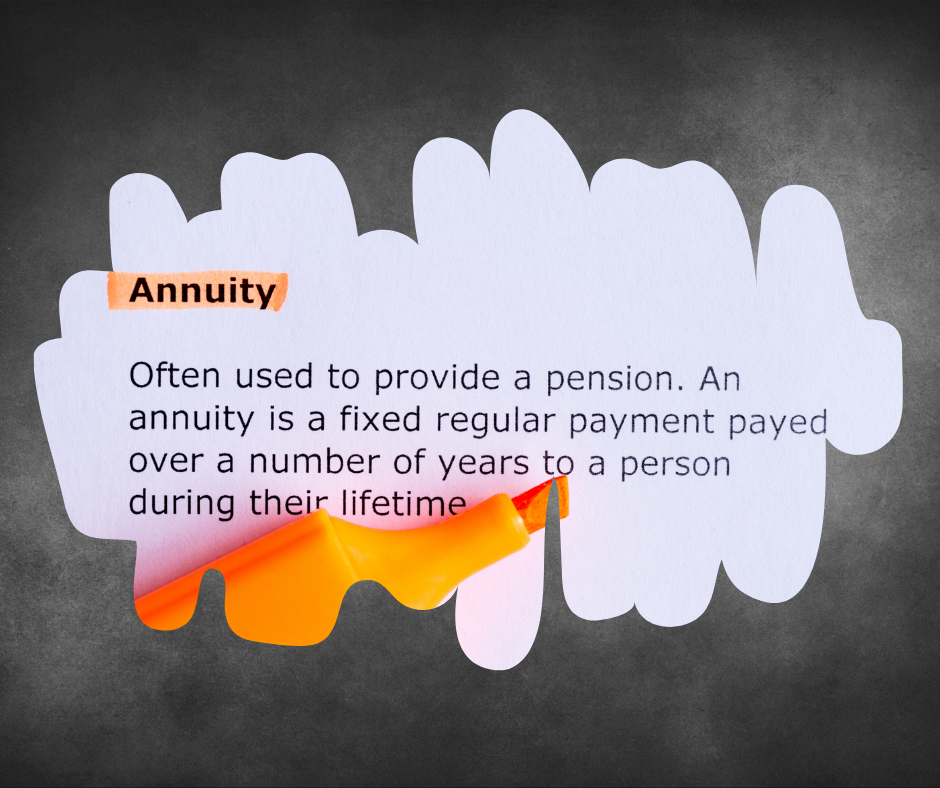
Mom had mentioned an annuity several times over the years. “Oh, I have that annuity that will help with expenses,” she’d say. But when she died? We couldn’t find any paperwork for it anywhere. To be honest, I didn’t even know what an annuity was.
Mom had never given us details about the annuity, but it was clearly important to her. I had the sense that it was something my father had set up for them; he had died in 2006. Was she getting payments from it?
We scoured her bank statements looking for a monthly, quarterly, or annual payment from anything that sounded official. From a file folder with an insurance company’s name on it, my sister eventually unravelled a series of corporate mergers that revealed the source of the annuity. Which was still being paid and the company needed to be notified of Mom’s death.
Now imagine you’re living in Japan, and your family back home has to figure out not just what accounts you have, but which ones are in yen, which ones are in dollars, which Japanese bank requires a hanko, and which American investment firm needs a medallion signature guarantee that doesn’t exist in Japan.
I’m not trying to be dramatic here. I’m just saying that a little organization now saves everyone a lot of headaches later. Including you, while you’re still around to benefit from being organized.
Your future self will thank you. And so will your family.
I am excited to launch a project today that will benefit thousands of people in Japan for years to come: foreign residents with roots overseas; families with mixed heritage; and Japanese nationals with foreign connections and investments.
It’s a bilingual workbook to help you pull together life’s important paperwork from emergency contacts to global investments. A deeper form of emergency preparedness that reaches right through to end-of-life.
The International Resident’s Ending Note is a riff on Japanese end-of-life workbooks, but this one recognises two important differences:
Many people in living Japan have assets, obligations, and connections beyond Japan;
Ending Notes aren’t really about preparing for death; they catalog your life so you can live without worry.
Living in Japan gives us enough things to worry about: natural disasters; language barriers; and bureaucracy that nobody understands. Let’s not also stress about how contacts will find what they need in an emergency. Being organised with an Ending Note gives you confidence.
Even though I created this, I was not prepared for how satisfying it was to fill in the workbook. It’s big-time adulting that isn’t easy. There are many irritating parts, like looking up SWIFT codes and getting access to long lost accounts. I shed a few tears, too, thinking about my family after my demise. But overcoming those hurdles and emotions settled my underlying anxiety. A big relief!
How this project came to be
I created the Ending Note because getting organized was the only way to stop my brain from spinning through endless “what if” scenarios.
Soon I’ll turn sixty. I’ve lived in Japan almost half my life. I own a house; I love my neighborhood; and I don’t foresee returning to the US where I was born.
And I’ve been exceedingly lazy about keeping paperwork organised. In fact I’d lost track of some old pensions. I even have a bank account I hadn’t logged into for years. I needed to get organised and control my financial life.
And to think ahead a decade or two.
What’s going to happen when I die? Japan’s death procedures are a lot different than America’s. That’s going to be a challenge for my American family and heirs. How will they know what to do?
So with my usual “solve the problem you see” attitude, I wrote the two books I needed.
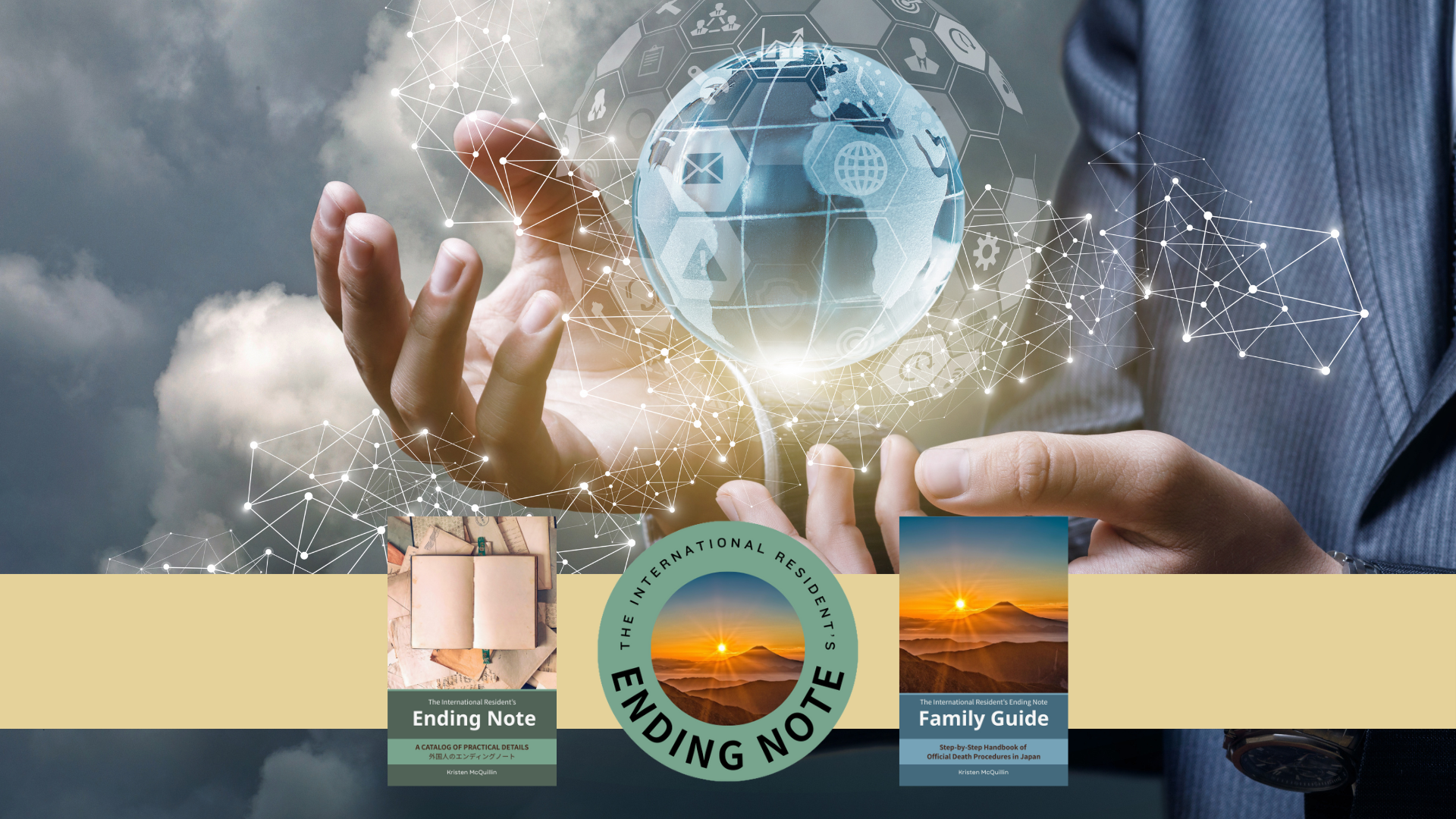
Book 1: International Resident’s Ending Note
The Ending Note is a 59 page workbook that you fill in section by section. It covers basics like where you keep your important documents, who to contact in an emergency, and keeping with the Japanese style ending note it has a section for end-of-life details, too.
Because everyone’s life is different, large portions of the of the workbook are modular to accommodate almost any circumstance. There are pages you can duplicate to cover all your bank accounts, your local and global real estate holdings, and vehicles. If you have pensions, insurance policies, valuable items in any country, you’ll find places to note them.
Book 2: Family Guide
This one is for my sister. Or for your sister…or whoever is on the other side of an ocean or border and might need to help settle your affairs.
It includes a step-by-step timeline of what to do in Japan. There are explanations of where to go, the required documents, and what to expect. It all links back to the Ending Note. There’s even a Japanese glossary and phrasebook for an analog fallback to communication.
So if you are interested in getting organised, creating peace of mind for your loved ones, and living your life with less worry, get your copy of the printable PDFs for just 3000 yen – less expensive than an evening at the izakaya.
So here’s the thing about living abroad: you accumulate a lot of stuff. Not just physical stuff, but digital accounts, bank relationships, insurance policies, and bureaucratic entanglements that would make your head spin if you tried to explain them to your family back home.
When my mother died in 2019, my sister and I spent days going through her desk looking for anything useful. We found house repair receipts from 1995, bank statements from accounts that had been closed for years, and empty file folders with intriguing labels. What we didn’t find were her passwords, which meant closing her email and online accounts turned into a bureaucratic nightmare involving faxed death certificates and way too many phone calls.
That experience made me think: if this was hard in our home country, in our native language, with familiar systems… what’s it going to be like for my American family when something happens to me here in Japan?
So I wrote a book about it. Actually, two books. Because foreign residents face challenges that regular estate planning advice just doesn’t cover.
Over the next few months, I’ll be sharing what I’ve learned about getting your affairs organized when you live in Japan. Not because I’m morbid, but because being prepared means you can actually relax and enjoy your life instead of worrying about the mess you might leave behind.