If you’ve got your Ending Note Bundle, but you are saying (or thinking)
“It’s hard to get started.” “It’s overwhelming and sad.” “After the first section, I gave up.” “I need a kick in the pants to do this.“
…then I’ve got you! Let’s work on it together.
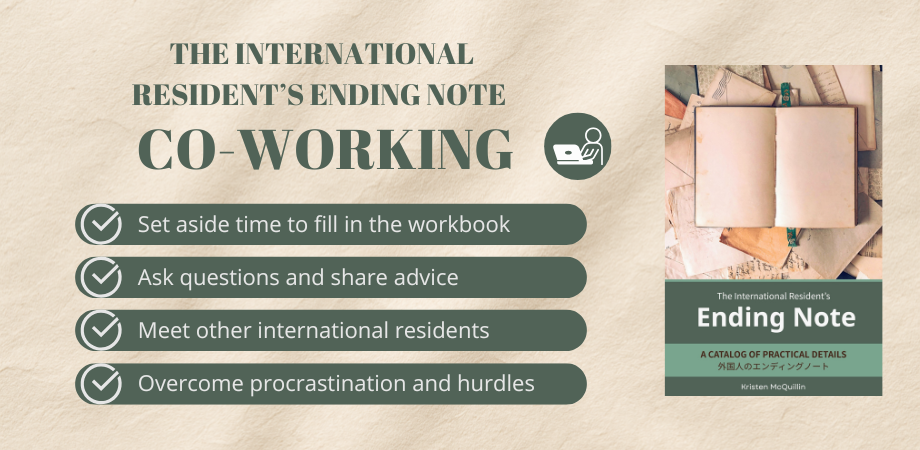
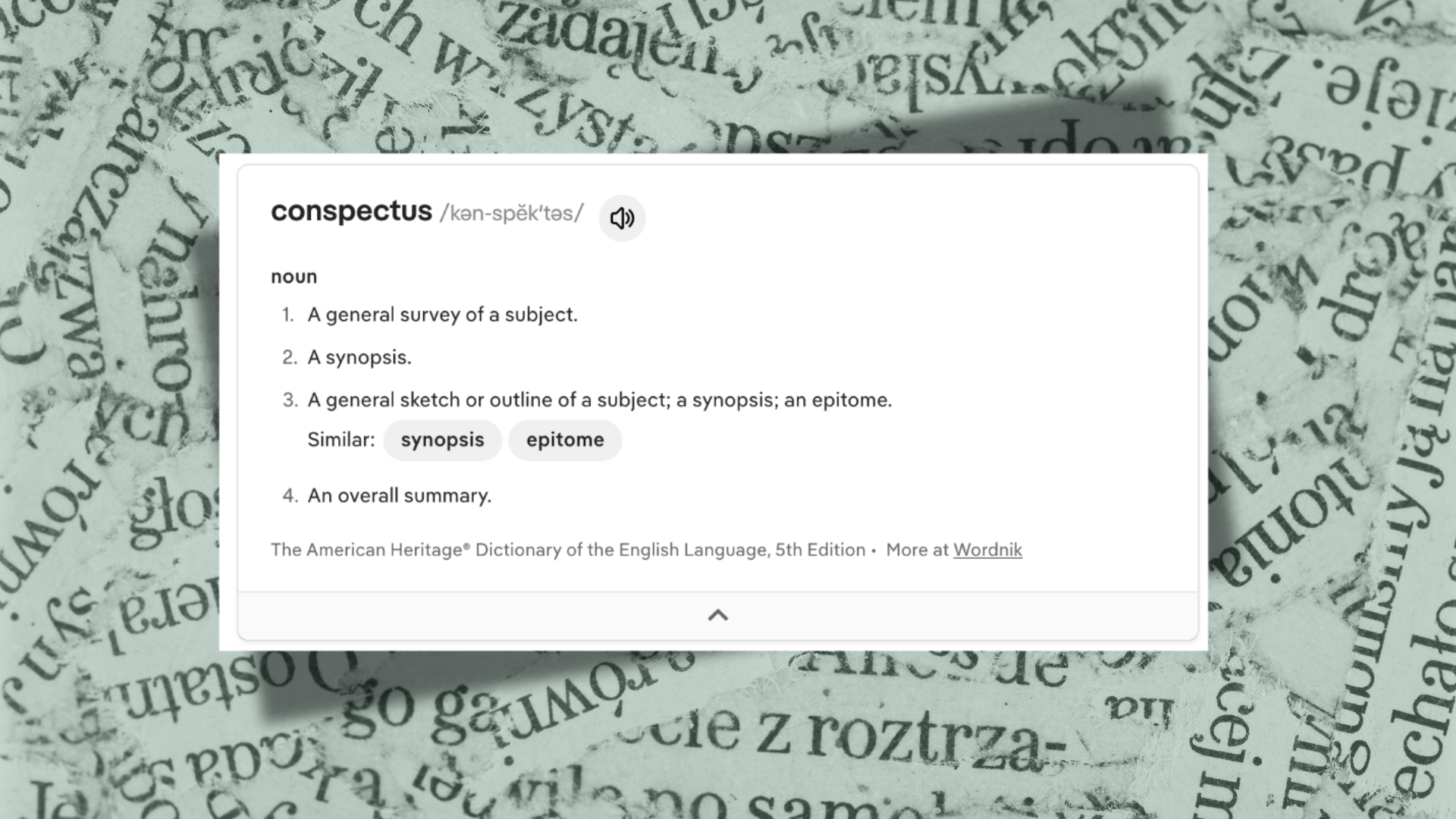
Online co-working sessions are a great way to improve accountability and work together, separately. You choose which part of your Ending Note or Conspectus to work on and go at your own pace.
Here’s what to expect:
15 minutes: Introductions & accountability setting. You’ll set a goal and let everyone know what it is.
60 minutes: Focus time: we stay on the call (muted, cameras optional) as we work; I will answer questions in the chat as required.
15 minutes: Accountability check-in – did you reach your goal? Wrap-up and final encouragements
I’ve scheduled two sessions in February. Join either or both. They are free of charge and the Zoom links are below.
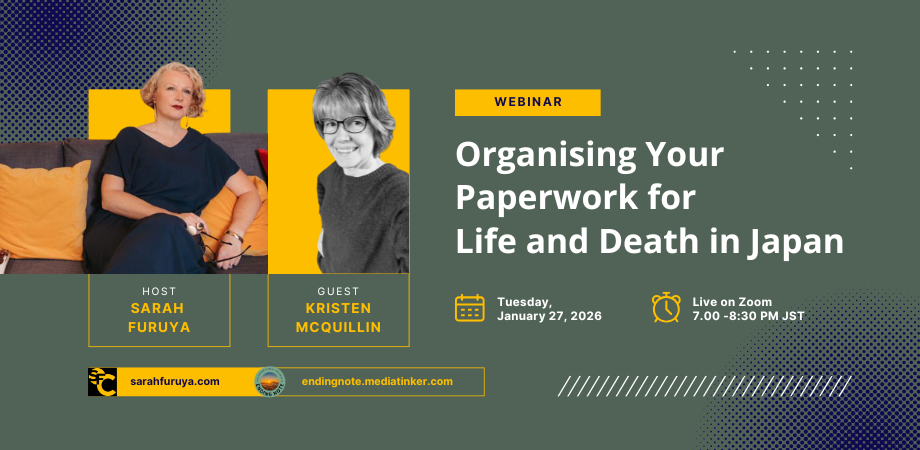
Join Sarah Furuya and me for a 90 minute webinar to find out more about the power of getting your act together, get a look into the Ending Note from the author’s perspective, and ask your questions.
The Ending Note System – A comprehensive guide to organizing emergency information, financial accounts, and end-of-life wishes
Navigating Death Affairs in Japan – Documents, procedures, and costs you need to know
Creating Your Financial Conspectus – A master summary document for emergencies
Digital Legacy Planning – Managing passwords, social media, and digital assets
Final Arrangements – How to document your wishes and prevent family disputes
What to Expect 30 minutes: Welcome and personal stories about why this matters 30 minutes: Overview of “The Ending Note” and practical organization strategies 30 minutes: Live Q&A with your questions answered
Once you’ve completed your Ending Note and the Conspectus, who should know about them? Honestly, there’s not much point doing all this work if nobody knows it exists when they need it.
Can you just tell people about it? Should you give a copy to someone? This is going to depend on your level of trust.
Who are your trusted contacts?
It took me a while to figure out who my trusted contacts are. I thought they all needed to be utterly trustworthy, but that’s not how people are, is it? For example, I have a friend who checks in on my cats while I am travel, but I wouldn’t feel comfortable giving her access to my passwords. I trust some friends to drive my car and others…not so much.
So my trusted contacts in this case don’t all have the same set of materials from the Ending Note.
My legal professional (who is my executor) has my Conspectus and she knows where to find the full Ending Note. She has the Emergency Access Guide, too.
My neighbor has the key to my house and she has a copy of Emergency Access Guide. She is lives a few doors down and is great in a crisis. She knows everyone and all the local services.
My best friend in Tokyo is a good gateway to the “foreigners in Japan” portion of my life. So she has the Emergency Access Guide and also knows about my Ending Note.
My sister and sister-in-law have the Emergency Access Guide. They both have the Family Guide and my sister has a copy of my Ending Note; she is an emergency contact for my password manager, too.
My husband has the originals of everything, access to all my passwords already, and knows how to reach the relevant parties when needed.
So I have six trusted contacts who can work together to access whatever they need. None of them is going to be surprised to get a call or email from the others.
See why it’s a bit confusing? You might do it differently…there is no definitive way.
One Page for Everyone
Let’s look in depth at the Emergency Access Guide on page 7. It’s probably the most useful single page in the whole book because as I said, it lets your trusted contacts connect and gives them the information they need to handle an emergency.
This page is designed for that moment when someone needs immediate access to your essential information. Like if you’re in the hospital and can’t communicate, or if there’s an emergency and someone needs to get into your apartment.
It has:
Your emergency contact
Your trusted keyholder
How to access your house or apartment
Where you keep your Ending Note
Where your insurance policies and bank books are
Your critical passwords – phone unlock, computer, email
That’s it. One page.
Tailoring the Information
Now, you might be thinking, “I don’t want to give my neighbor my phone unlock codes.”
Fair. Levels of trust vary! So here’s what you do:
Fill out a separate copy of page 7 for each contact. That lets you tailor the information to each trusted person. For anything you prefer not to divulge, just note who has access: “Contact Mimi for the unlock code.”
Why are passwords even on this page? Well, a few years ago, a friend of a friend passed away suddenly and mysteriously. Her devices were all locked. She had once mentioned she wanted her computer wiped of embarrassing details if something ever happened. I saw the efforts my friends took to make things right before her parents arrived in Japan, and learned how awful it can be for others if you are the sole keeper of your unlock codes.
So now you know what the Emergency Access Guide is all about. Go fill it in and make sure your trusted people know what they need to know.
Digital Assets section is on pages 30 through 34 in The International Resident’s Ending Note.
Do you work from home? Do you listen to Spotify or Apple Music? Do you have online banking? Spend time scrolling social media on your phone? Play Wordle? Use ChatGPT? Are you a content creator? Do you have an online side hustle?
These activities are all tied to the digital assets of your life. No matter your age or socioeconomic status, you probably have digital assets.
And at some point, you will need to let someone know about your online life, how to access your accounts, and what to do with them after you’re gone. So let’s talk about how to make this easier for everyone – including you, right now, while you’re here to use your own accounts.
Unlocking your Phone
The Digital Assets section starts with Hardware – your phone, your computer, your tablet. They will change over time, sure. But write down what you own now.
The most important thing here? Your unlock codes. If your family can’t get into your devices, they can’t access anything else.
In movies and on TV, we see characters swiping phones with fingers or holding them in front of faces for biometric locks, but it’s not likely to happen (or work) in real life. You need to share your numerical unlock codes.
If you filled in the Emergency Access Guide on page 7, then you wrote your unlock codes for your emergency contacts. So in this section you can just say who has the codes. Or you could share the codes again here if that seems more useful.
After the unlock codes, the Password Manager is essential for access to your accounts.
Instead of writing down every single password for every single account – which would take forever and go out of date almost immediately – use a password manager like Bitwarden or 1Password. I shared a long article about this here: (Un)Locking your World with a Password Manager
On page 31 you’ll let people know which password manager you use, where its installed, and how to access the master password. Don’t write the master password or passphrase here.
Online Presence
Pages 32-34 allow you to list your social media accounts, email addresses, cloud storage, and streaming services to make it easier to see your online life at a glance.
You can simply tick the boxes. The blank lines let you note multiple accounts or usernames. And since there are way more services than the ones I’ve listed, fill in the other ones you use.
If you have a side hustle or are a sole proprietor there’s a section for noting the tools and services you use for that, too.
In my own digital life, there is overlap with which things are personal vs business and which are of vital importance vs less important. You can find your own way to note the key things in the Ending Note or in your password manager.
These lists go hand-in-hand with your password manager and also the section for General Instructions for Digital Legacy on page 31.
What do you want your heirs to do with your accounts: Do you want your photos preserved? Your blog archived? Your online presence scrubbed? Write it down. Otherwise someone else will be guessing.
For social media platforms, there are legacy and memorialisation options. Each of them is different, but you can set them up in advance by designating legacy contacts or it can be handled after you’re gone by providing death certificates.
Related Section: Recurring Payments
Many digital assets are SAAS subscription based and paid automatically. There’s a whole section in the Ending Note for recurring payments. When you get to it on page 54, you can return to Digital Assets as a reference.
The Digital Assets section provides an overview of your online life. Filling in pages 30 – 34 shouldn’t take more than an hour.
But if you have more time, consider using this as an opportunity to clean up unused accounts and update your password manager.
Your future self with thank you and your family won’t be playing treasure hunt when they’re dealing with everything else.
Wills are an important aspect of end-of-life planning that’s not covered deeply in the Ending Note, but will impact your estate.
Inheritance law in brief
I am NOT a lawyer. This is my layman’s understanding of the Japanese inheritance law. Please consult professionals.
Foreign vs domestic rules
International residents don’t fall directly under Japanese inheritance laws. But many of us still end up under them.
When international residents die here, Japan looks to their homeland’s inheritance laws. If the country says “use the law of domicile” or “use the law where the property is located” then Japanese law applies.
In practice, most inheritance laws worldwide focus on domicile so the parts of the estate located in Japan (real estate, bank accounts, personal property), fall under Japanese inheritance laws.
What is your estate?
Your assets + your debts = your estate.
In Japan, your heirs directly inherit both. They become personally responsible for your loans and other financial obligations. This is why there is legal recourse to renounce inheritance.
Meanwhile in America, the UK, Australia, Canada and other countries, your debts are paid from your assets and heirs receive the remainder.
Division of the estate
Many, many of my Japanese friends do not have wills; they are relying on the law to divide their estate, which is the normal way of things. There is an order of inheritance that works fine for typical families:
BUT, if you want to leave your spouse 100% instead of 50%, cut off a scofflaw daughter, give your estate to charity, or any other variation from the above order, then you need a will.
Types of Wills in Japan
Handwritten. You write your will on paper, date it, and sign it. It can be in your native language. It needs to be specific about the assets you are giving – official numbers of the real estate parcels, serial numbers on any valuables, etc. Your Ending Note and Conspectus will be helpful.
Pros: It costs nothing to create and can be done anytime. Cons: Might be lost/overlooked. Has to go through probate. Cost: Free
Handwritten with official registration. As above, you write your will by hand, sticking to some required formatting rules, then file it at the Legal Affairs Bureau. This puts it into the official record and avoids probate.
Pros: Ease, cost, and validity. No witnesses required. Cons: Needs to follow formatting guidelines. Not free. Cost: 3900 yen
Notarized. This is prepared with professional assistance and finalised by a notary who reads it aloud in front of you and two witnesses before the will is signed and filed.
Pros: No question of validity; officially filed and can’t be lost Cons: No DIY templates; can be expensive Cost: depends on your assets; see below
Secret. This is a handwritten will, sealed, which is put on file in the presence of witnesses. The contents are not disclosed to anyone.
Pros: Your wishes stay secret; filed for official retrieval Cons: Potential drama. Will need to go through probate Cost: Notary fee of 11,000 yen + witness fees
Costs for Notarised Wills
Notarised wills are expensive because they use the help of a range of professionals.
Scriveners prepare your documents. You can choose either an administrative scrivener 行政書士 or a judicial scrivener 司法書士to draft your will before sending it to the notary. They set their own fees, so get a few quotes.
For reference, my administrative scrivener charged 5000 yen/hour which included formatting the asset list, drafting the will, translating it to English, chasing up details, interfacing with the notary, and consulting a lawyer about an unclear point.
Lawyers 弁護士 may be more effective than scriveners if your situation is complex and requires legal consultation across borders. Fees are set by the firm.
Notary 公証人 is the registered official who reads, verifies, signs and files your will. Fees are set nationwide for estates up to 100 million yen. The base notary fee is 11,000 yen with an additional amount depending on your assets. An estate of 100 million yen will cost 54,000 yen. For an estate over 100 million, the notary sets the fee.
Additional fees are charged for interpreters, witness (if you don’t bring your own) certified copies of the will, notarized affidavits, translations, etc.
Do you even need a will?
I can only say it is your personal decision.
My decision was notarised wills for myself and for my husband. Here’s why:
In general, wills allows us to bypass the Japanese division of inheritance;
the notarised will means there is a professional on this side of the ocean that our family can reach out to;
there will be no probate or complications.
Our administrative scrivener, Ayumi Mitake from Mitake Gyosei, guided us through a system we don’t fully understand and didn’t want to research deeply;
she will also act as executor when needed;
and as a feel-good point, she is a colleague from years ago when we were both circus/dance performers. I was happy to reconnect and employ her in this new role.
The process allowed me to call on my neighbors for help as witnesses. Now we have a deeper bond of trust and friendship. More feel-good points!
Last but not least, no way would I have been able to persuade my sweetheart to handwrite a will. Not arguing over it is also a feel-good point.
For a wonderfully entertaining look into wills and inheritance in Japan, I recommend the short stories of “Wm. Penn” in Inheriting the Japanese Way
For my personal perspective into the process and the experience of visiting the notary: My Will Be Done
Whatever route you choose for your will, you’ve got this. Take care.
Use folders in the password manager to help your heirs find the necessary logins.
My password manager currently contains 576 passwords. Normally I don’t think a lot about that, but working through the Ending Note, I have taken a new perspective.
My password manager is a backup of the important parts of the Ending Note.
Almost everything I do with my finances – from banking to paying taxes – is done online. I have subscriptions on autopay. My insurance, pension, and MyNumber are all accessible online.
So if my Ending Note disappeared completely, my password manager would be a practical way for heirs and contacts to discover much of the information they needed.
Except its not organised. It’s crufty AF. There are duplicate entries, inactive accounts, and client projects I will never need to log into again. How will my sister know what’s what?
Time to organise and to take care of the mess.
First, a Folder System
These folders aren’t for me; they are for my executor and my sister. I rarely look that deeply into my password manager. It autofills entries for me or I might search for a specific detail.
So I decided to organise with those people in mind, adding variations to fit my life and its many logins.
Your structure will vary, but I can recommend three important folders:
Essential Accounts. The “must haves” for your estate: banking, digital assets, insurance, MyNumber, primary e-mail, health portals, insurance, etc.
Active Subscriptions. Everything you are currently paying for monthly or annually: streaming services, software, cloud storage, hosting services, online learning, business tools, utilities, etc.
Inactive. This is a holding place for old & unused accounts; remember to delete the accounts before you remove the credentials
You can use those three folders and then leave everything else unsorted; that is a valid strategy.
Or go beyond and add more folders – do you want to put all of your shopping sites together in one folder, or separate them by country or by type?
Then, the Organising
I use the word “tedious” a lot in these posts, because many of the Ending Note activities require slogging through tasks, digging up paperwork, and organising things for the future. This is another tedious process.
Who wants to spend hours cleaning up a password manager? Nobody. But you can do it anyway. Here’s how I suggest doing it:
Write down the new folder names and put them in front of you. This will save you forgetting them as you go along over multiple sessions.
Pick a place to start. I opened a folder in Bitwarden and reorganised the contents into my new folders A quick win. Then I did the next folder. I am on my way!
Keep organising until you want to pause. Come back to it later – but do come back until you are finished.
Helpful Hints:
If you don’t know what an entry is (auth.1234.xyz?), try to log into it. Sometimes it just needs a clearer name; sometimes it’s no longer necessary.
Expect to spend some time in the “Forgot your Password?” world. There will be at least a few services that changed their system since the last time you logged in…in 2016.
If you want to delete a credential, make sure the associated account is deleted first. Deleting your password doesn’t deactivate the account.
It can be irritatingly difficult to delete an account (I am looking at you, 1-800-Flowers. URGH) and may involve actual phone calls or sternly worded emails. When you can’t get the account deleted, tuck it into the “Inactive” folder and make a note about it.
When you take a break, note where you stopped so you can pick up where you left off.
If you do nothing else to organise your estate and prepare for an emergency, you should set up (or tidy up) a password manager.
Password security, like “getting healthy,” is one of those things that we all put off even though we want to do better. And in the meantime, we reuse the same passwords across dozens of sites or keep a notebook full of outdated passwords with the most used ones memorised and never noted at all.
It’s terribly insecure and we know it, but managing unique passwords for every account feels impossible.
That impossible feeling is exactly what password managers solve.
What Is a Password Manager?
A password manager is a digital tool that stores all your passwords behind one master password. Instead of remembering dozens of passwords, you only need to know one. The software handles everything else—generating strong passwords, saving them in an encrypted vault, filling them in automatically, and keeping them synced across your devices.
I use Bitwarden, but there are excellent alternatives like 1Password, Dashlane, and Keeper. Even LastPass remains popular despite some past security concerns.
Built-In vs. Standalone: What’s the Difference?
You have probably noticed that your browser and operating system offer basic password management. Chrome, Safari, and Windows all save passwords and sync them across devices. So why use something separate?
Pros: Free, already installed, seamless integration, no extra apps needed
Cons: Locked to one app or OS, fewer security features, limited sharing options, basic organization, no emergency access planning
Standalone (Bitwarden, 1Password, etc.):
Pros: Work across all browsers and devices, advanced security features, better organization, secure sharing, emergency access options, often include 2FA storage
Cons: Cost money (usually), require separate installation, slight learning curve
The built-in options work fine if you’re fully committed to one ecosystem—say, all Apple devices. But if you use Windows at work, an Android phone, and sometimes Firefox, a standalone manager makes life much easier.
The Tedious Part (there’s always one)
Setting up a password manager for the first time is a lot of little steps and a few big ones. You’ll need to:
Install the app and browser extensions
Create a strong master password or passphrase
Add existing passwords for all your accounts (import them or or add them manually)
Update weak passwords to strong, unique ones
Enable two-factor authentication on the manager itself
Set up emergency access (more on this below)
This might take an afternoon to get started. Maybe a weekend if you’re thorough. Steps 3 & 4 are the real grind. If you are adding passwords manually, do the frequently used accounts first and then dribble the rest in as you encounter them.
Even though its a pain, you do this once. After the initial investment, your digital life gets easier and more secure.
The Daily Benefits
Once set up, a password manager becomes invisible in the best way:
Autofill: Click a login field, select your credentials, done. No more hunting for that password you definitely wrote down somewhere.
Password generation: Need a new account? Your manager creates a random password instantly. You’ll never even see it—just save it and move on.
Two-factor authentication (2FA): Many managers, including Bitwarden, can store your 2FA codes alongside passwords. Security purists will say this reduces the “two-factor” benefit slightly, but for most of us, having 2FA at all is the important part. And it’s far more convenient than juggling a separate authenticator app.
Cross-device sync: Start login on your phone, finish on your laptop. Everything stays current automatically.
Secure sharing: Need to share your Netflix login with family? Or give your assistant access to work accounts? Standalone managers let you share credentials securely without sending passwords over email or text.
Security audit: Most managers will analyze your vault and warn you about weak, reused, or compromised passwords. Bitwarden does this beautifully and seeing all your security weak spots listed out is surprisingly motivating.
Sharing in an Emergency
My mother’s missing passwords were one of the things that made me create the Ending Note. We lost access to all of her digital accounts because her passwords were unavailable to us. It made everything harder when she died.
Whether your passwords only exist in your head, or in a password manager behind a passphrase you haven’t shared at all, you’ve just created a nightmare for the people you love.
Password managers are essential estate planningtools, not just security conveniences. But how do you balance your account privacy with sharing passwords in an emergency?
Emergency Access Features
Many standalone password managers include emergency access options:
Bitwarden: You can designate trusted contacts who can request emergency access. After a waiting period you set (24 hours, 7 days, etc.), they automatically gain access unless you deny the request. This means if you’re incapacitated, your designated person eventually gets in—but if someone tries fraudulently, you have time to block them.
1Password: Offers similar emergency access features, plus their “Travel Mode” that temporarily removes sensitive vaults when crossing borders. That’s very handy in today’s complicated international climate.
Dashlane: Includes emergency contact features with customizable waiting periods.
These features solve the problem elegantly: your accounts stay secure during your lifetime, but there’s a clear succession plan.
Sharing Your Master Password: When and How
The master password is the key to everything, so sharing it requires thought. Here are some strategies:
Don’t share it… yet: For most of your life, you shouldn’t share your master password with anyone. Use the emergency access features instead. This keeps you secure while ensuring help is available if needed.
When to share:
Terminal illness or advanced age when cognitive decline is possible
Before major surgery or risky travel
When explicitly planning your estate distribution
Three ways to share securely:
Write it down and seal it up in an envelope to add a layer of physical security. If the seal is broken, you can tell that some’s seen the master password.
Store it safelywith your Ending Note, will, and other important documents. Use a safety deposit box, safe, or other secure location.
Split the password using Shamir’s Secret Sharing (advanced, but some families do this—requires 2 of 3 people to combine their parts)
Use your password manager’sbuilt-in emergencyaccess and document that process in your Ending Note.
Do NOT share:
Via email, text, or messaging apps (never-ever!)
With people you don’t trust completely with your entire digital life
Without also documenting which accounts are most critical for your survivors (see the next post in this series)
Your Digital Legacy
In The International Resident’s Ending Note, there’s a whole section on digital assets because this matters more than people realize. Your password manager becomes the master key to:
Financial accounts your executor needs to settle your estate
Photo libraries your family wants to preserve
Social media accounts that need to be memorialized or closed
Subscription services that keep charging if not canceled
Cloud storage with important documents
Email accounts with years of correspondence
Having all this organized in one secure place—with a clear succession plan—transforms what could be a months-long nightmare into a manageable process.
Think about it: would your spouse know how to access your email right now? Your banking app? That investment account you opened years ago? If the answer is “probably not,” you need a password manager with emergency access configured.
Is Cloud Storage Safe?
Standalone password managers typically store your encrypted vault in the cloud. This makes some people nervous, which is understandable. But here’s what actually happens:
Your vault is encrypted onyour device before it ever reaches the cloud. The company never has access to your master password or unencrypted data. They’re storing gibberish without the key. Even if their servers were compromised, your passwords remain protected by your master password’s encryption.
That said, if you’re uncomfortable with any cloud storage, Bitwarden offers self-hosting options, and some managers like KeePass are entirely local.
I Really Mean This
I’ve been online since 1989. In 2015, after literal decades of password sloppiness, I finally started using Bitwarden. It was one of those “why didn’t I do this sooner?” moments. The setup was annoying, for sure. But now I have strong, unique passwords for every account, 2FA is enabled, and I never think about passwords anymore.
More importantly, I’ve designated emergency contacts, documented the process in my Ending Note, and know that if something happens to me, my family won’t be locked out of critical accounts during an already difficult time.
If you’re still using “Fluffy2020!” for half your accounts, just pick a manager—Bitwarden if you want free and excellent, 1Password if you want premium features and polish—and commit a weekend to setting it up properly. While you’re at it, set up emergency access. Your future self will thank you.
If you’ve looked at the full International Resident’s Ending Note and felt overwhelmed, the Conspectus is here to help you take the crucial first step in your emergency and estate planning.
https://youtu.be/a2FhoA5UrBs
What is The Conspectus?
It’s is a seven-page fillable PDF that distills the essential information from your Ending Note into one concise, easily shareable document. Think of it as the executive summary of your life’s practical details.
It includes the information your trusted people will need on hand in case of emergency.
Personal Details
Contacts
Important Documents Location
Personal Property
Financial Assets
Financial Liabilities
Insurance Policies
How does it differ from the full Ending Note?
The Conspectus is a streamlined reference that catalogs key details. The Ending Note is a comprehensive workbook for thinking through, documenting, and organizing all the details necessary for emergency and estate planning.
Won’t it still be tedious to fill out?
Yes. Tedium is never far off when it comes to filling in documents.
You’ll need to gather account numbers, look up contact information, and hunt down policy documents. But there is a clear goal in sight. It’s only 7 pages more than half of them are lists.
And because it’s a fillable PDF, making updates is easy when life changes.
I had already completed my Ending Note when I created the Conspectus , but I kicked myself for not creating this digital summary sooner – it is more useful than I expected.
The Conspectus works beautifully as:
A starter document that you complete first, then use as a roadmap for the deeper work in the full Ending Note
An index to your full Ending Note, helping you quickly locate detailed information
A quick reference for daily life when you need to find an account number or contact
A shareable summary that’s easier to send to trusted family members than the complete workbook
Start with The Conspectus, celebrate that achievement, then dive deeper with the full Ending Note when you’re ready.
With big scary projects, I like to “eat the frog” and do the hard thing first. So when I sat down to fill in the Ending Note, I turned to page 55, the Final Arrangements section. This is the part everyone wants to skip.
Even if you haven’t thought about it much, you probably have an idea of what sort of final arrangements you want. You’ve already been to funerals. You’ve been to memorial services. You know what you liked about them and what felt wrong.
If you can visualise what a good send-off looks like, then Final Arrangements isn’t death planning, it’s event planning. The event is about you, but you won’t be there to explain what you want.
So here’s a chance to write down your vision of that grand final party. The Ending Note gives you a framework and you can expand with as much additional detail as you like.
The Final Arrangements section has three main parts:
First, Cultural Considerations – A few short lines for your religious preferences, the style of funeral you want, and where you want to have it – here in Japan, in your home country or anywhere else.
If you’re like me and you’ve lived in Japan for decades but you’re not Japanese, you might have ideas about combining Japanese customs with customs from your home country. Incense offerings at the open-casket wake, perhaps? Towels as gifts to mourners, or maybe anything except towels…
Second, Funeral Service. Do you want one? What size or style?
The Ending Note lists common options: private, family only, traditional, company funeral (that’s a thing in Japan), or direct cremation with no service. Check the box that feels right.
Japanese funerals usually happen within days, but your family might be scattered across countries and time zones. So maybe note how to include them, whether it’s delaying the event until people can travel, or in a modern post-pandemic style, livestreaming the service.
There’s also a place to note funeral costs. If you’ve prepaid anything, write that down here with the contact information. If you want to use your savings, note which account if you set something aside specially. Funerals in Japan can be quite expensive, and that’s explained in the Family Guide, so being clear in this section will help everyone with the financial side of your event.
Third, Burial and Monument.
You’ve got options: Japanese family grave, new grave, eternal memorial, scattering ashes, tree burial… The Ending Note lists many, but not all, possibilities so you can add your own under Other.
And if you have preferences about the monument design, the epitaph, or where you want ashes scattered, there’s space for that too.
If you’re feeling ready to go deeper, on the next page there’s space to add final messages, personal history, and family traditions you hope the next generation will keep up. If you have a lot to share, don’t be shy to add extra pages.
Thinking about our mortality, the brief time we have with the people we love, and what they will feel when we are gone – it’s emotional. I shed a tears when I filled in Final Arrangements.
I know that if it made me cry, then my sister will cry, too. Or she will put on a stoic “Kristen would have wanted this” mask and struggle through figuring out what to do.
So even though I didn’t want to think about my own final arrangements, writing down my wishes now makes the inevitable future more comfortable for family and friends. They will know what I wanted and they can provide it without guessing and without arguing.
So grab your Ending Note, pour a comforting drink, maybe have tissues handy, and fill in pages 55 through 57. You already know what you want – you just need to write it down.
You can change this anytime. It’s written in your handwriting in a workbook, not carved in stone. Cross it out and revise, or reprint the pages and start over fresh.
If you’ve lived here through any December, you’ve encountered Japan’s version of a holiday season that includes adopted Western customs like Black Friday, Christmas cake, illuminations, and fried chicken. They are fun, a little whacky, and optional among your Japanese friends.
The more relevant year-end traditions and celebrations are the ones leading up to the New Year:
Pay your debts
Make amends
Clean house from top to bottom
Prepare osechi foods
Send winter gifts
Write nengajou cards
Enjoy bonenkai parties
I propose adding one to this list for 2025 and beyond:
Complete (or review) your Ending Note & Conspectus.
Through December, I will be sharing some videos and posts with practical tips on getting different sections done and what to do if the Ending Note doesn’t cover your specific life circumstances.